
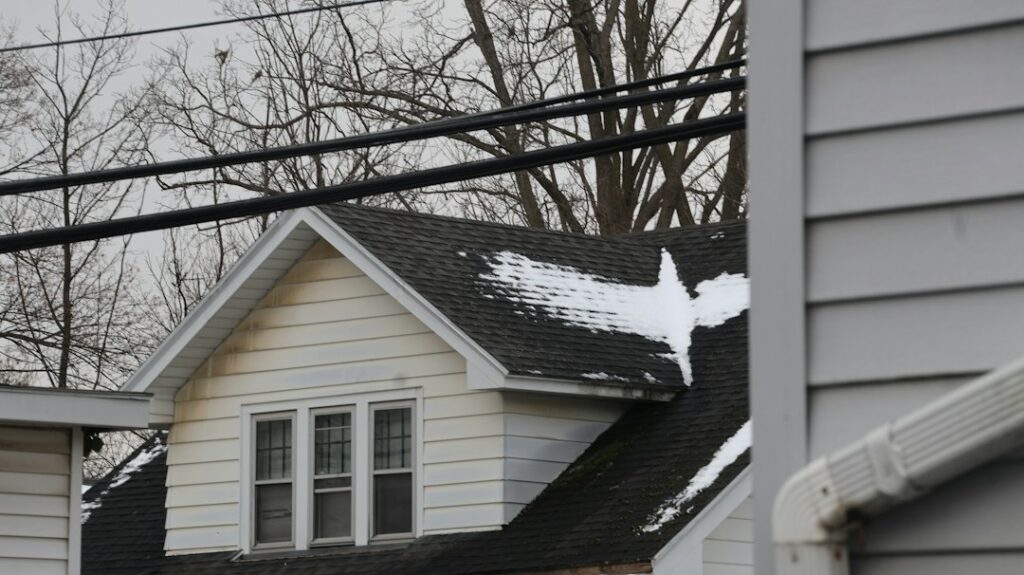
Can a sports ball really damage a roof?
Yes. A baseball, softball, lacrosse ball, hockey puck, or hard rubber ball can damage roofing materials, especially when thrown or hit with force. The most vulnerable areas are shingles, flashing, vents, skylights, gutters, and roof edges.
A single impact may leave only a small mark, but roofing damage is not always obvious from the ground. A cracked shingle, loosened flashing piece, or punctured vent boot can allow water to enter during the next heavy rain. In Hudson, where roofs must handle rain, snow, ice, wind, and repeated freeze-thaw cycles, a minor impact can become more serious over time.
The risk depends on several factors:
- The type and speed of the ball
- The age and condition of the roof
- The roofing material
- The location of the impact
- Whether water can reach the damaged area
- The amount of snow, ice, or wind exposure afterward
Which types of sports balls are most likely to cause damage?
Hard, dense balls create the greatest risk. Baseballs, softballs, lacrosse balls, cricket balls, and field hockey balls can strike with enough force to split or dislodge roofing materials. A hockey puck is even more concerning if it reaches a roof from a nearby driveway or yard.
Basketballs and soccer balls are usually less likely to break a healthy shingle, but they can still cause damage if kicked upward, thrown forcefully, or repeatedly struck against the same area. A wet ball may also be heavier than expected.
Golf balls present a special concern because of their small size and high speed. They can crack shingles, break skylights, dent metal flashing, and damage gutters. Even a soft practice ball can cause problems if a roof component is already weakened.
Older roofing materials may be affected by impacts that would not harm newer materials. Shingles become more brittle with age, prolonged sun exposure, repeated freezing, and loss of protective surface granules.
What parts of a roof are most vulnerable?
The roof surface is only one part of the system. Sports-ball damage often occurs at components that are thinner, raised, or easier to strike.
Shingles
An impact can:
- Remove protective granules
- Crack the asphalt surface
- Split a shingle
- Break a corner or tab
- Loosen adhesive strips
- Dislodge an entire shingle
Granule loss may appear as a dark or shiny spot. A cracked shingle may look like a short line, crease, or jagged split. Damage can be difficult to identify from the yard, particularly on roofs with dark or weathered materials.
Flashing
Flashing protects joints around chimneys, walls, dormers, roof valleys, and other transitions. A ball can bend or dent exposed flashing, creating a gap where water can collect. Because flashing is designed to direct water, even a small change in its shape can affect drainage.
Vents and vent covers
Roof vents, plumbing vent flashings, and powered ventilation units may crack or become loose after an impact. Plastic components are especially vulnerable to hard balls and can become more brittle after years of weather exposure.
Skylights
A direct hit can crack acrylic, scratch the surface, or break glass. A skylight may remain apparently intact while its surrounding seal or frame has been damaged.
Gutters and downspouts
Sports equipment that strikes the roof edge can dent gutters, pull them away from the fascia, or bend downspouts. A damaged gutter may still carry some water, so the problem can go unnoticed until overflow stains or erosion appear below.
What does sports-ball roof damage look like?
Some signs are visible from the ground, while others require a closer inspection. Look for:
- Loose, lifted, or missing shingles
- Freshly exposed dark underlayment
- Shiny patches where granules have been removed
- Dents or bends in metal flashing
- Cracked vent covers or skylight surfaces
- A gutter that sags or has a new dent
- Roofing debris on the ground after a game
- Water stains on ceilings or upper walls
- Damp insulation or musty odors in an attic

A roof does not need to leak immediately after being hit. Water may enter only during wind-driven rain, melting snow, or a storm that pushes water beneath a damaged shingle.
Can a ball cause a roof leak without leaving a hole?
Yes. Most impact-related leaks do not involve a large, obvious hole. A ball can loosen a shingle, break its seal, or deform flashing enough to create a path for water. The roofing surface may look mostly normal while the water-shedding design has been compromised.
Repeated impacts can also wear away granules and weaken the upper surface. The damage may remain dry during light rain but leak during a prolonged storm. In winter, water that enters a small opening can freeze, expand, and enlarge the damaged area.
This is one reason a roof should not be judged only by whether water is currently dripping indoors.
What should residents do after a sports-ball impact?
Begin with a ground-level check from a safe location. Look for obvious changes to shingles, vents, skylights, gutters, and roof edges. If possible, compare the area with a photograph taken before the incident.
Do not climb onto a roof that is wet, icy, steep, or unfamiliar. Hudson’s winter conditions can make even a low-slope roof hazardous, particularly when snow hides damaged materials or freeze-thaw cycles leave surfaces slick.
If there is active leaking, place a container under the drip and move valuables away from the area. Ceiling stains may spread beyond the actual entry point, so the location of the indoor mark does not necessarily identify the damaged roof component.
Temporary measures may help limit water entry, but placing a tarp or attempting to walk on the roof can create additional hazards or damage. Any inspection involving steep pitches, unstable surfaces, electrical equipment, or significant structural concerns should be handled with appropriate safety precautions.
Does homeowners insurance cover sports-ball damage?
Coverage depends on the policy, the cause of the damage, and the deductible. Sudden accidental damage may be treated differently from gradual deterioration, poor maintenance, or damage that existed before the ball struck the roof.
Before filing a claim, document the date, visible damage, weather conditions, and any related interior staining. Photographs taken from the ground can be useful. Policyholders should review their own coverage language or speak with their insurer because deductibles and exclusions vary.
Insurance coverage does not change the need to prevent additional water damage. A small opening that is left exposed through several storms may lead to interior repairs that are separate from the original impact.
How can sports-ball damage be prevented?
The most effective prevention is to keep high-impact play away from the roofline. This is especially useful where homes are close together, yards are small, or roof edges are near driveways and play areas.
Practical steps include:
- Aim throwing and kicking activities away from the house.
- Avoid using a roof, wall, or driveway as a rebound surface.
- Use softer training balls when children are practicing near structures.
- Move portable goals and batting areas farther from buildings.
- Keep hockey, baseball, and lacrosse practice away from roof edges.
- Inspect older roofs more carefully because brittle materials are easier to damage.
- Trim or reposition objects that encourage balls to land on the roof.
A roof with intact shingles and properly secured flashing is more resistant to accidental impacts, but no roofing material is designed to withstand repeated strikes from hard sports equipment.
When is a closer inspection warranted?
A closer inspection is sensible after a direct hit near a vent, skylight, chimney, valley, flashing joint, or roof edge, even if no leak is visible. It is also warranted when shingles are missing, granules are scattered, gutters are bent, or ceiling staining appears afterward.
The same applies when the roof is older, already weathered, or has recently endured heavy snow and ice. Impact damage and weather damage can overlap, making the source difficult to identify without examining the affected materials closely.
IMAGE_ALT:
A baseball rests beside a cracked roof shingle near a bent metal flashing edge.
