
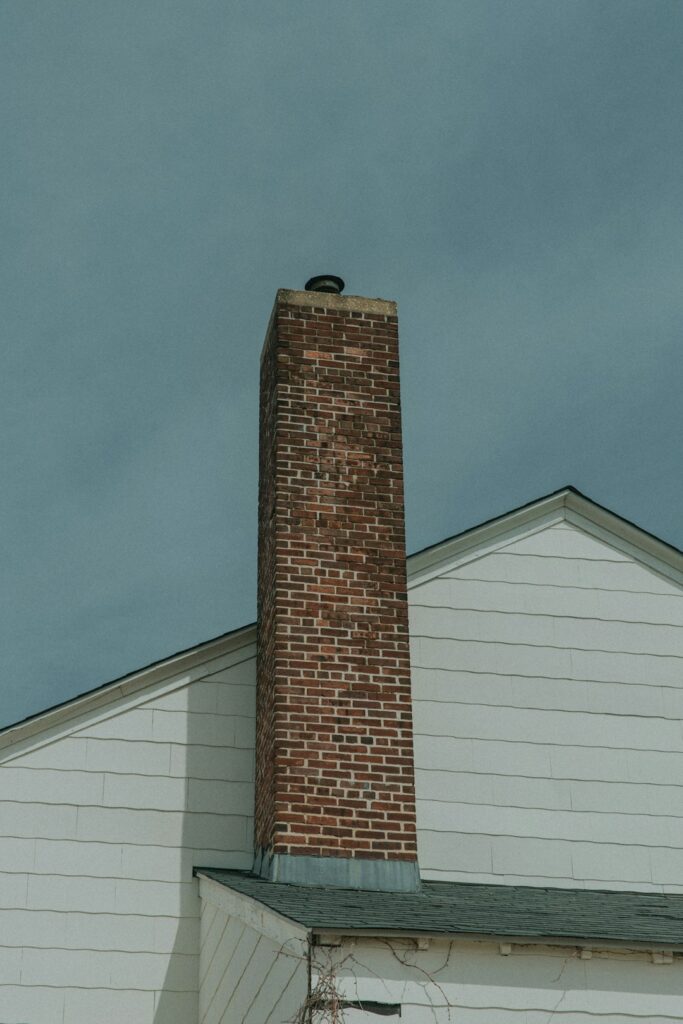
A roof cricket is a small raised structure built on the uphill side of a chimney or another wide roof penetration. Its purpose is to split and redirect rainwater, melting snow, leaves, and other debris so they can move around the obstruction instead of collecting behind it.
For homes in Hudson, NY, this detail can be especially useful because roofs must handle a mix of heavy rain, freeze-thaw cycles, wet snow, and occasional winter accumulation. A properly designed cricket helps reduce the amount of water and snow that presses against one of the most leak-prone areas of a roof.
What does a roof cricket look like?
A cricket resembles a small, peaked roof attached to the back side of a chimney. The high point usually runs along the chimney, while the sloped sides direct water toward the left and right sides of the roof.
It is sometimes called a chimney saddle. The terms are often used interchangeably, although “cricket” is the term most commonly heard in roofing discussions.
A typical cricket includes:
- A framed or masonry structure that creates a raised slope
- Roof sheathing and underlayment
- Roofing material that matches or properly transitions with the main roof
- Metal flashing where the cricket meets the chimney
- Counterflashing set into or secured against the chimney surface
The cricket is not simply a piece of metal placed behind a chimney. It is a three-dimensional roof form designed to guide water around the obstruction.
Why is a cricket needed behind a chimney?
Without a cricket, a chimney interrupts the natural downhill flow of water. Rain running down the roof can strike the uphill side of the chimney and slow down or stop. Water may then collect along the chimney base, especially during intense storms.
Snow can create an even greater problem. A large chimney can act like a barrier, allowing snow to pile up on its uphill side. When that snow melts, the water may remain trapped against the flashing or move beneath nearby shingles.
A cricket helps by:
- Dividing runoff before it reaches the chimney
- Directing water toward open roof areas
- Reducing standing water behind the chimney
- Limiting the amount of snow that can remain packed against the masonry
- Helping leaves and small debris move around the penetration
- Reducing stress on the flashing system
The cricket does not make a chimney intersection leak-proof by itself. Flashing, counterflashing, underlayment, shingles, and roof drainage must all be installed correctly.
Are roof crickets required by building code?
Under commonly used residential building-code provisions, a cricket or saddle is generally required on the ridge side of a chimney or other penetration more than 30 inches wide, measured across the roof slope. The required design can depend on the roof slope, the size of the obstruction, the roof covering, and the code edition adopted for the project.
Code requirements can also vary for commercial buildings, additions, historic structures, and unusual roof designs. Local permitting rules may affect how the detail must be built or documented.
A chimney narrower than 30 inches may not trigger the same specific requirement, but that does not automatically mean a cricket would be unnecessary. Roof shape, chimney location, slope, snow exposure, and drainage conditions still matter.
How does a cricket help during Hudson winters?
The climate in Hudson includes winter snow, freezing temperatures, rain, and repeated transitions above and below freezing. Those conditions can expose weak roof details that might survive for years in a consistently dry or warm climate.
A cricket is useful in this setting because it helps prevent several common winter problems:
Snow buildup: A broad chimney can hold snow against its uphill side. A sloped cricket reduces that blockage and encourages snow to shed or melt toward the sides.
Ice formation: Meltwater that remains trapped near flashing can refreeze overnight. Repeated freezing and thawing may loosen roofing materials or open small pathways for water.
Heavy rain during shoulder seasons: Spring and late autumn storms can deliver substantial rain while leaves and debris are still present on the roof. A cricket helps keep the drainage path more open.
Masonry exposure: Water that repeatedly sits against a chimney can enter cracks, deteriorated mortar joints, or porous masonry. Over time, moisture can contribute to spalling and interior staining.
A cricket cannot prevent every chimney-related leak, but it improves drainage at a location where water management is often difficult.
Can a cricket prevent chimney leaks?
A cricket can significantly reduce the chance of leaks behind a chimney, but it is only one part of the roof assembly. Chimney leaks may also result from deteriorated mortar, cracked chimney caps, missing step flashing, failed counterflashing, damaged shingles, or inadequate underlayment.
The connection between the cricket and chimney is particularly important. That area should be flashed and counterflashed so water cannot enter behind the metal. Roofing materials should also be integrated with the cricket rather than simply placed over its edges.
Signs of a possible problem include:
- Water stains on ceilings or walls near the chimney
- Damp insulation in the attic
- Rusted metal or wet wood behind the chimney
- Shingles that curl, lift, or deteriorate near the penetration
- Moss, leaves, or packed debris collecting behind the chimney
- Damp masonry or peeling interior paint after rain
- A musty odor near the chimney chase

A leak may not appear directly below the chimney. Water can travel along roof decking, framing, or insulation before becoming visible indoors.
Does every chimney need a cricket?
No. The need depends on the chimney’s width, position, roof slope, and surrounding drainage pattern. A narrow chimney near a roof ridge may not create the same water barrier as a wide chimney located lower on a sloped roof.
Some homes also have masonry features, skylights, vents, or other wide penetrations that may benefit from a similar saddle-like design. The term “cricket” is most often associated with chimneys, but the underlying principle applies to any broad obstruction that interferes with runoff.
A chimney that does not have a cricket is not automatically defective. However, if water consistently pools behind it, snow becomes trapped there, or the flashing has a history of leaking, the drainage design deserves closer attention.
What should homeowners look for during a roof inspection?
From the ground, the cricket may be difficult to see because the chimney blocks much of it. Binoculars can help, but walking on a roof or climbing near a chimney can create fall and masonry hazards.
During a visual inspection, look for:
- A raised, peaked shape on the uphill side of the chimney
- Properly aligned metal flashing
- No visible gaps between the flashing and chimney
- No loose roofing material at the cricket edges
- Clear drainage paths to both sides
- No large piles of leaves or snow trapped behind the chimney
After a major storm, check the attic if it is safely accessible. Look for damp decking, water marks, or daylight around the chimney penetration. A roofing detail that appears sound from outside may still have hidden damage underneath.
If inspection requires walking on a steep, wet, icy, or deteriorated roof, the risk of falling is more serious than the value of a close visual check. In those conditions, evaluation should be handled with appropriate fall protection and building-safety practices.
Is a cricket the same as chimney flashing?
No. A cricket and chimney flashing perform different but related functions.
The cricket changes the shape of the roof to move water around the chimney. Flashing seals the joints where the chimney meets the roof and cricket. Counterflashing adds another layer of protection, typically covering the upper edge of the base flashing against the masonry.
A roof can have flashing without a cricket, and it can have a poorly designed cricket with inadequate flashing. Reliable water control requires both proper drainage and properly detailed joints.
Understanding that distinction helps explain why adding more sealant is rarely a complete solution. Sealants can deteriorate, while a correctly shaped cricket directs water away before it reaches vulnerable seams.
What is the main benefit of a roof cricket?
The main benefit is improved drainage behind a wide chimney or roof penetration. By dividing runoff and reducing snow accumulation, a cricket lowers moisture exposure at a roof intersection that is otherwise difficult to protect.
For older homes and houses with masonry chimneys, the condition of this detail is worth including in routine roof and attic inspections. A small raised structure may not attract much attention, but it can play a major role in keeping water from collecting where the roof and chimney meet.
